Tuesday, 7 June 2016

Early June at Newhaven's Castle Hill LNR: continental visitors arrive


Week 10 of the 2016 transect-walking season


Butterfly numbers were again lower than expected with only seven species seen during the walk. The weather during the walk was warm and sunny with only light winds, but this was the first day in a while that the weather was not cool, cloudy and windy. Despite the tendency to think that numbers are poor, upon comparison with most other years numbers are about average - and one species, the Green Hairstreak (Callophrys rubi) has already had its best year to date. Eighteen butterfly species have been recorded so far during 2016.


Diamond-back Moth (Plutella xylostella)
Two overseas species spiced up proceedings: the tiny Diamond-back Moth (Plutella xylostella) and the much larger - and much more noticeable - Painted Lady (Vanessa cardui). The latter was seen flying in off the sea in a northerly direction and these are possibly the vanguard of a greater immigration which may occur over the coming days. These are a strong, unmistakeable insect and there is always a hope that the event of 2008 will be repeated, when many, many millions of these butterflies piggybacked across three generations from the African Atlas Mountains into the UK and as far north even as the Arctic Circle, before their offspring made the return journey back south at the end of their season. 

The Diamond-back Moth is in the midst of a similar immigration event, which hit Newhaven on 30th May, but apparently from the east rather than from southerly climes. I have recorded more than ten thousand of these moths in Newhaven during the past week and I saw an additional 400 - well, 398 - during this walk. Many of these were nestled amongst hoary cress and kale along the cliff bottom and their caterpillars will feed on these and other plants of the cabbage family during the summer. There were without doubt many thousands more than the 400 that I counted, but transect-walking rules are not to be broken, so I counted only what flew up before me as I stepped along the route! I have written a separate report about the Diamond-back Moths which provides more information about this tiny species and the current immigration event.


Large Skipper (Ochlodes faunus)
Whilst these and other exotic species add colour to the nature reserve, we are inevitably more interested in the native species which breed each year at Castle Hill. Numbers fluctuate annually, in response to many variable and confounding factors, and not least the weather. These species have evolved to take the knocks and then make hay when conditions are more favourable. This year is proving to be more or less average when compared with some previous years. It was pleasing to see the emergence of the Large Skippers (Ochlodes faunus), albeit in only small numbers, but these feisty little butterflies, which lay their eggs on Cocksfoot grass, should increase in number during the next few weeks. Common Blue (Polyommatus icarus) numbers are increasing by the week and the first brood should peak in the next two or three weeks, as should the day-flying moths the Mother Shipton (Euclidia mi) and Burnet Companion (Euclidia glyphica), which can be found amongst herbaceous areas along the tops of the cliffs.

Earlier in the year I made a chance observation of a Raven raiding the Barrow Head cliff face hollows which are used as nest holes by a small group of Jackdaws and feral pigeons. The Jacks were perturbed and apparently helpless on that occasion as the Raven leered menacingly into each hole, but there was nothing to steal away at the time (egg-laying time was still in the future) and it flew off empty-handed. I witnessed a repeat raid today, probably by the same Raven. The response of the Jacks could not have been more different: whereas they previously appeared to yield helplessly to their preponderant corvine cousin, today they were a tight fighting force. Arranged in formation they swooped in turn, five Jacks deep, to mob their attacker, they swarmed around, jostled, grappled, set upon, overran and comprehensively saw it off. Within the space of thirty seconds the egg thief was utterly routed. It was spectacular stuff! The Jacks had a most valuable resource to lose this time in their chicks, which must now be very close to fledging. I think this is an example of the concept in the study of behavioural ecology known as the incumbency advantage.

Krebs & Davies (1993) eloquently explained at length how an incumbent (or owner of a resource) has an advantage over a challenger because the incumbent knows or understands the resource at stake, whereas the rival does not possess such detailed knowledge. I am not a behavioural ecologist, but I believe the battle over the Jackdaw chicks (the resource) was an example of this. The investment by the several adults and the bonds with the chicks resulted in a much greater challenge to the Raven than when their nest holes were empty. The hypothesis of the incumbent advantage is that the owner will fight more strongly than the less certain challenger and almost always win. Also, they have more to lose than the predator has to gain. The stakes vary and there are plenty of examples in nature when the predator wins the prey, but I was stunned and mightily impressed by the ferocity of the parent birds on this occasion.

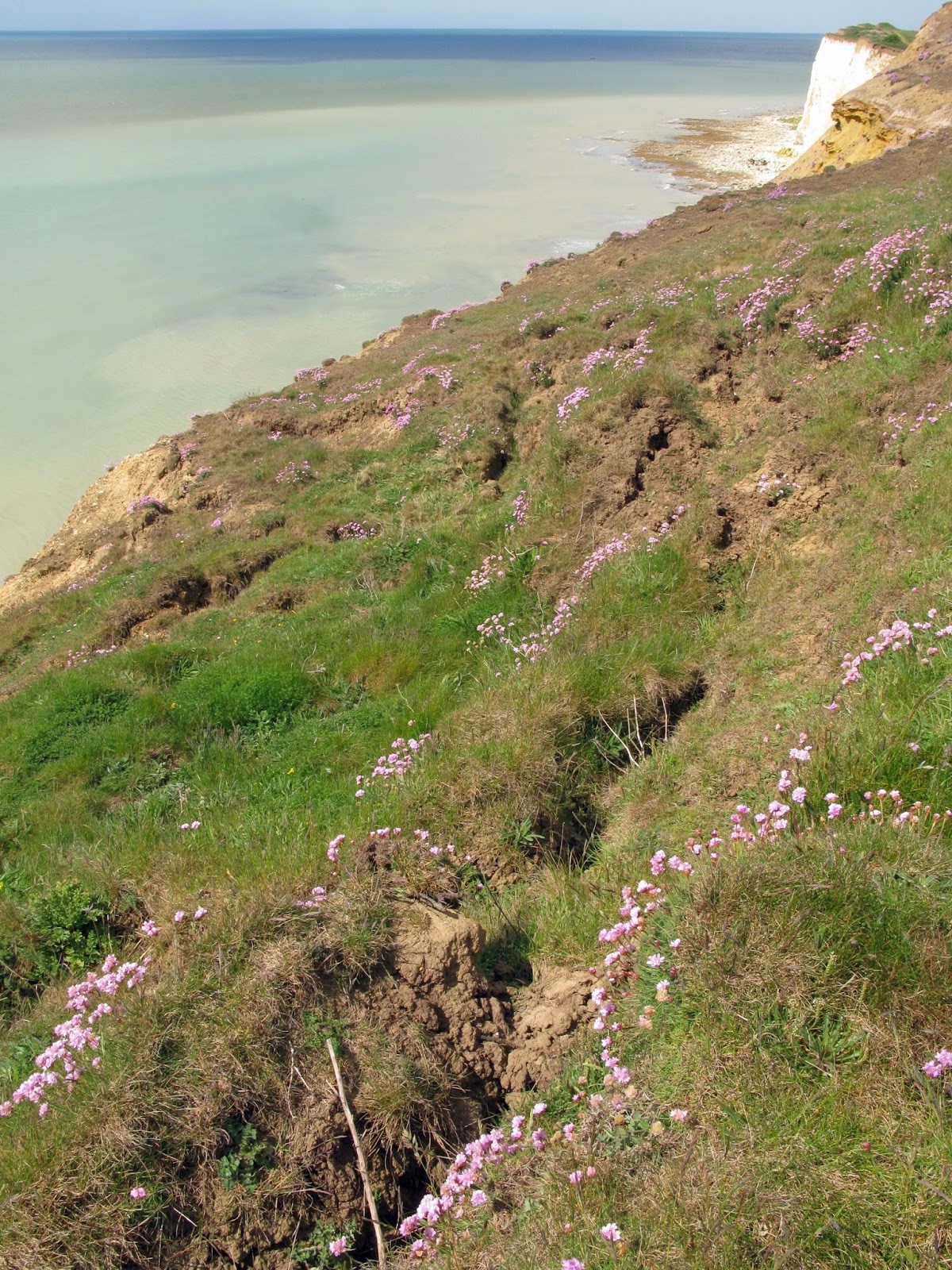
The reserve is easing itself into the summer season now. Grasses are shooting skywards and flowering, along with Thrift and the Common Blue's food-plant Bird's-foot Trefoil on and above the cliff faces. There are the usual concerns about humans' conflicting interests and multiple uses of the nature reserve, but I am not going to bore the reader with a personal diatribe until I have taken the time to convey my feelings - my disgust even - in a more positive light.


The full list for Week 10 (24 species)


Butterflies (7 species)
Large Skipper (Ochlodes sylvanus)  3

Small White (Pieris rapae)  1

Green-veined White (Pieris napi)  1

Speckled Wood (Pararge aegeria)  2

Small Heath (Coenonympha pamphilus)  1

Painted Lady (Vanessa cardui)  9

Common Blue (Polyommatus icarus) 12


Moths (17 species)
Diamond-back Moth (Plutella xylostella)  398

Common Tubic (Alabonia geoffrella)  1

Light Brown Apple Moth (Epiphyas postvittana) 1

Common Marble (Celypha lacunana)  3

Plum Tortrix (Hedya pruniana)  5

Knapweed Bell (Epiblema cirsiana)  1

Regal Piercer (Pammene regiana)  1 – first site record

Grey Gorse Piericer (Cydia ulicetana)  15

Lead-coloured Drill (Dichrorampha plumbana)  1

Garden Grass-veneer (Chrysoteuchia culmella)  1

Meadow Grey (Scoparia pyralella)  1

Little Grey (Dipleurina lacustrata)  2

Lackey (Malacosoma neustria)  1

Yellow Belle (Semiaspilates ochrearia)  1

Angle Shades (Phlogophora meticulosa)  1

Mother Shipton (Callistege mi)  1

Burnet Companion (Euclidia glyphica) 4


Other highlights
Grove or Brown-lipped Snail (Cepaea nemoralis)  1 – not previously found at CHLNR
22-spot Ladybird (Psyllobora vigintiduopunctata)  1
Dock Bug (Coreus marginatus)  7
Green Shield-bug (Palomena prasina)  1

Common Tubic (Alabonia geoffrella)
Garden Grass-veneer (Chrysoteuchia culmella)

Monday, 6 June 2016

An invasion of the Diamond-back Moth

May 2016 in Newhaven felt decidedly average when considered from a butterfly and moth perspective - until after the 29th. The final two days of the month saw an explosion in numbers of a tiny migrant micro-moth species: the Diamond-back Moth Plutella xylostella.

Individual Diamond-backs began to appear in my garden moth trap this year from 6th May and continued in this manner every few days until 23rd, when they disappeared for a week. Then, on 30th, I saw twenty. The most I had ever recorded during one night before was 64, so twenty individuals gained my attention as it was a comparatively noteworthy number. The nights following this produced the following numbers:

31st May: 175 individuals
1st June: 138 - after which I expected the spike in numbers to gradually regress back to the mean
2nd June: 382
3rd June: 437
4th June: 1740
5th June: 411
6th June: 360

To place this in some form of perspective, I had recorded a total of 881 Diamond-backs during the previous ten years. This was by no means a high number compared with many other coastal stations, but it is the number which I had recorded at home in Newhaven, and that figure is therefore a useful datum for comparison. In five nights from 30th May that total was comprehensively eclipsed and I recorded 1152 individuals; this total was itself eclipsed on the night of 4th, bringing the total in six nights to 2892! This total did not include the few hundred Diamond-backs seen resting and possibly nectaring on a flowering Cordyline in my front garden on 2nd June; it did not include the 2000+ individuals (a conservative estimate) which I saw on the evening of 3rd while walking from home over the apex of the Downs along the east of the Ouse Valley to Bishopstone - a distance of just over one mile as the crow flies; it did not include many hundreds more seen on 4th along a well-known spot for migrants on the Downs above Denton and Poverty Bottom. It was at this latter location that the scale of this invasion occurred to me. How does one count a tiny micro-moth flitting about here there and everywhere in such great numbers that, for every one seen, another ten - another thousand? - pass unseen? Add to this a carpet of buttercups which spread before me across 45-odd acres in a lurid nebula and the task appeared even less attainable. Counting the buttercups would have been less of a challenge. I gave up. I simply enjoyed the spectacle before me.


Diamond-back Moth Plutella xylostella
So what is the Diamond-back Moth? It is a member of the Plutellidae family of moths. There are seven species found within the UK, but only three of these are found in the south east and all of these have been recorded at Newhaven: the Diamond-back, the common Grey-streaked Smudge (Plutella porrectella) and less common Bittercress Smudge (Eidophasia messingiella). Each of these species feeds on plants of the cabbage family. The Diamond-back is a small species: about 8mm in length at rest. It is a neat-looking insect, with a long-thin body around which the wings are folded roof-like when at rest. It has an alert upright resting posture and its antennae are forward pointing, much like its migratory attitude. This moth is a visitor from the continent each year and it is seen in variable numbers from one year to the next. In observing the flight of this species, it is a remarkable thought that they make it across any stretch of water, but this they do, presumably at high altitude, before making landfall in the UK.

Being based on the south coast at Newhaven and only about seventy miles from continental Europe (the French coast between Fecamp and Dieppe is nearest), migrant insect species are both a staple of life every year for the Lepidopterist and a fascinating area of study. The Ouse Valley and Downs to the east are a fairly reputable station for migrant sightings. The Willowherb Hawk-moth (Prosperpinus prosperpina) Oleander Hawk-moth (Daphnis nerii) sightings of 1985 and 2014 respectively are probably the best examples, but getting on for forty migratory moth species have been recorded in Newhaven during the past ten years and these have included occasional sightings of Crimson Speckled (Utetheisa pulchella), regular small numbers of Olive-tree Pearl (Palpita vitrealis), Vestal (Rhodometra sacraria), Gem (Nycterosea obstipata), Ni Moth (Trichoplusia ni), and very good numbers annually of Bloxworth Snout (Hypena obsitalis), which, along with several other migrant species, has begun to colonise along the coastline. Silver Y (Autographa gamma), Red Admiral (Vanessa atalanta) and Diamond-back are the most commonly encountered on a yearly basis, but migrant species are well known for their episodic spikes in abundance during specific continental immigration events. One famous recent example was seen in 2008 when many millions of Painted Lady (Vanessa cardui) butterflies migrated northwards from the Atlas Mountains of North Africa as far as the Arctic, the generations leap-frogging each other as they progressed. 

Most of these and the other migratory species are seen during periods of strong winds from the south, but immigration events occasionally occur from other directions and the current Diamond-back invasion appears to be one such example of an immigration from the east or north east. The spike in Diamond-back numbers which began during the final two days of May appears to be the greatest immigration event by that species and it might yet prove to be amongst the most significant of migratory episodes observed during the past 170 years, when formal recording began. Bearing in mind that these moths will breed following their arrival, we could be in store for a second bonanza later in the summer.

Diamond-back Moth at Castle Hill LNR, Newhaven

Thursday, 2 June 2016

Late May at Newhaven's Castle Hill Local Nature Reserve

Week 8 of the 2016 transect-walking season at Castle Hill LNR

 
Thrift in bloom at Castle Hill LNR

The final week in May was not remarkable for butterfly activity across the nature reserve, but it was for moths, with seven new species being seen for the first time at the site. This raises the species list for butterflies and moths to 339. The weather was not ideal and the wind and cloud kept some species from being active. Amongst the butterflies, the Green Hairstreak (Callophrys rubi) continued to show well and it seems this impressive metallic green insect is having an excellent season as it continues to become more established across the nature reserve. This was a rare sight a few years ago, but it has been one of the commoner species seen so far this year (although this is partly because it has been a poor year so far for many of the other butterfly species). Wall (Lasiommata megera) can now be seen along the grassy apex of the reserve to the west and east of the Lookout. This butterfly is a specialist of chalk downland and is always a pleasure to see at Castle Hill.

Moths were seen in good numbers this week, but these were mostly 'micro-moth' species which require a close search. It is well worth taking the time to search for these around the woody areas of the reserve though because you may be rewarded with the sight of a spectacular Sulphur Tubic (Esperia sulphurella) or Common Tubic (Alabonia geoffrella). Nine of the species seen belong to the large family of moths known as Tortrixes. Tortrix species fly at dusk and on calm, overcast days, as well as at night. The family has about 440 members, so it is one of the larger families. Forty four Tortrix species have now been recorded at Castle Hill - only another 90% are now left to find!

One of the new additions to the site list is the Cocksfoot Moth (Glyphipterix simpliciella). This is one of the smallest but most common of the British species. David and I saw an estimated ten thousand of these moths in a few hours between Lewes Racecourse and Mount Harry in Lewes some years ago. Where they are present, they can be found on the heads of yellow flowers such as buttercups, with a dozen or more nestled in a single flower-head. They are easy to find, abundant, but curiously absent from some areas where one might expect to find them. My personal opinion is that they have a preference for low-nutrient, poor-quality soils (such as chalk grassland), where the diversity of flora is greater. It is therefore a relief that this previously absent moth has finally turned up at Castle Hill after many years fruitless searching.

Other insect orders were seen in good numbers during the survey. Most of these are not counted so that attention can be focused on the butterflies and moths, but some regular species are included in my count such as dragonflies and damselflies, Heteroptera 'true' bugs (e.g. shield-bugs), some beetle families, crickets and grasshoppers. Bees, wasps and hoverflies are left for other, more knowledgeable, recorders to work on!

A dragonfly and plenty of damselflies were seen, mostly around the damp, scrubby areas on the north-facing slope - including an example of the Variable Damselfly (Coenagrion pulchellum), which it is believed is another first for Castle Hill LNR. This is a species which has a scattered distribution over England and Wales, but it is much more widespread in Ireland. It is an excellent addition to the site list and I hope that more are seen. Careful attention needs to be given during identification in order to separate it from Azure and Common Blue Damselflies.

Variable Damselfly (Coenagrion pulchellum)

Week 8 species list


Butterflies (10 species)
Large White (Pieris brassicae)  2
Small White (Pieris rapae)  6
Green-veined White (Pieris napi)  1
Wall (Lasiommata megera)  2
Speckled Wood (Pararge aegeria)  6
Small Heath (Coenonympha pamphilus)  2
Red Admiral (Vanessa atalanta)  1
Green Hairstreak (Callophrys rubi)  9
Common Blue (Polyommatus icarus)  5
Holly Blue (Celastrina argiolus)  3

Moths (22 species)
Mullein (Shargacucullia verbasci)  3 larvae
Silver Y (Autographa gamma)  1
Mother Shipton (Callistege mi)  1
Small Purple and Gold (Pyrausta aurata)  1
Straw-barred Pearl (Pyrausta despicata)  1
Lackey (Malacosoma neustria) 2 larvae
Mottled Pug (Eupithecia exiguata)  1*
Fruitlet Mining Tortrix (Pammene rhediella)  2*
Grey Gorse Piercer (Cydia ulicetana)  22
Red-barred Tortrix (Ditula angustiorana)  1*
Yellow-spot Twist (Pseudargyrotoza conwagana)  1
Common Marble (Celypha lacunana)  3
Marbled Orchard Tortrix (Hedya nubiferana)  1
Knapweed Bell (Epiblema cirsiana)  2*
Silver Carrot Conch (Aethes williana)  1
Light Brown Apple Moth (Epiphyas postvittana)  1
Sulphur Tubic (Esperia sulphurella)  3
Common Tubic (Alabonia geoffrella)  3
Common Nettle-tap (Anthophila fabriciana)  7
Apple Leaf Skeletoniser (Choreutis pariana)  1*
Cocksfoot Moth (Glyphipterix simpliciella)  1*
Gorse Case-bearer (Coleophora albicosta)  1*

*new species - not previously recorded at Castle Hill LNR

Damselfies and Dragonflies (6 species)
Large Red Damselfly (Pyrrhosoma nymphula)  1
Blue-tailed Damselfly (Ischnura elegans)  1
Common Blue Damselfly (Enallagma cyathigerum)  1
Variable Damselfly (Coenagrion pulchellum)  1
Azure Damselfly (Coenagrion puella)  11
Hairy Dragonfly (Brachytron pratense)  1

True bugs (4 species)
One of the Mirid bugs: Stenodema laevigata  6
Gorse Bug (Piezodorus lituratus) 2
Dock Bug (Coreus marginatus)  54
One of the Rhopalid bugs: Corizus hyoscyamii  1

Beetles
Thistle Tortoise Beetle (Cassida rubiginosa)  14 – mostly seen on broad-leaved low plants (e.g. burdock)
Common Cardinal Beetle (Pyrochroa serraticornis)  4

Crickets and grasshoppers
Speckled Bush Cricket (Leptophyes punctatissima)  2 nymphs

Flora
Ragged-Robin (Lychnis flos-cuculi)  2 plants in the ‘Friends Glade’ near the lower car park

Lackey (Malacosoma neustria)
Marbled Orchard Tortrix (Hedya nubiferana)

Thistle Tortoise Beetles (Cassida rubiginosa)


Green Hairstreak (Callophrys rubi)


Marbled Orchard Tortrix (Hedya nubiferana)  and the stunning Rhopalid bug Corizus hyoscyamii


More bugs: Gorse Bug (Piezodorus lituratus) and Dock Bug (Coreus marginatus) 

Common or Red-Headed Cardinal Beetle (Pyrochroa serraticornis)
Cliff-top erosion along western part of reserve
Hawthorn or May blossom (Crataegus monogyna)
Flowering umbellifers along northern track