Showing posts with label butterflies. Show all posts

Monday, 21 December 2020

Hibernating wildlife – dormancy as a winter survival strategy

An overwintering Peacock butterfly at Newhaven Fort tunnels
 

Hibernating wildlife – dormancy as a winter survival strategy

Did you know that the Dormouse is named after the French word meaning 'to sleep': dormir? It's one of quite a few British wildlife species which have adapted to winter by dodging it entirely.

We're halfway through the darkest time of year and have arrived at that brief moment of suspended animation, the Winter Solstice, when the days neither shorten nor lengthen. The world seems to be in a state of dormancy. For much of our wildlife the toughest time still lies ahead. Food is in short supply; life is full of challenges. Species that aren't able to migrate need to tough it out, but some species have adapted to conserve their energy by hibernating.

Much energy is saved by entering a state of torpor – the result of reducing heart rate, breathing, metabolism and body temperature. The depth of torpor varies between species and it is punctuated with periods of activity within their hibernaculum, a place of hibernation and relative safety, protected from the extremes of temperature, humidity and wind.

Hibernating animals still burn energy, but at a much reduced rate. They need to ensure their fat reserves will sustain them throughout the winter. Like migrating species, hibernating creatures feast on the autumn harvest in order to maximise their body fat before entering the hibernaculum.

Who hibernates?

Insects

Most butterflies spend the winter as eggs (ova), larvae or pupae, but some species hibernate as adults and emerge on warm winter days and at the start of spring as the day-length increases. These include the Brimstone and Red Admiral, which hibernate deep within vegetation, and the Peacock and Small Tortoiseshell, which seem to prefer structures such as unheated buildings or rabbit holes, providing the light, temperature, humidity and ventilation are stable. Rabbit warrens are excellent places to search for emerging butterflies on warm, sunny spring days.

Many moth species also hibernate as adults, including the stunning leaf-like Herald and the Bloxworth Snout, a recent UK colonist which is tolerant of the cold and usually only enters a light hibernation.

If you have ever noticed swarms of ladybirds in late-autumn around your windows and doors, these are likely to be the Harlequin Ladybird – an invasive Asian species released in Europe to control aphids. Hibernating around fenestration protects them from frosts and moisture.

Some fly species also hibernate and the one most commonly encountered is the Cluster Fly, a parasite of earthworms, which likes to hibernate in roofspaces and false ceilings.

Reptiles and Amphibians

All British reptiles and amphibians hibernate, although my pond often has active frogs around it deep into mild winters. Palmate newts overwinter in the damp ground beneath logs and stones, where they are protected from predators and frosts. Reptiles such as snakes and lizards choose dry hibernacula such as old burrows and compost heaps.

Mammals

The only geniune mammalian hibernators are hedgehogs, dormice and bats, but most other species including rodents and badgers become less active. Bats are often found in similar places to butterflies and moths. Hedgehogs make a hibernaculum from dead vegetation and emerge only to add extra insulation if the temperature drops too low. 

A hibernating Herald moth (Scoliopteryx libatrix)


Gardening for hibernating wildlife – how you can help wildlife in winter

Not tidying parts of your garden will help to provide space for hibernating wildlife amongst long grass and vegetation. Creating log-piles, a compost heap or making a bug hotel will help insects, amphibians, reptiles and mammals overwinter. Remember though to check bonfires before they are lit for hedgehogs and other species.

You might find a butterfly or moth inside your home which has been woken by the central heating. By holding them gently it is fine to place them in an outbuilding or in a hedge that can be safely exited when spring arrives.

The effects of climate change can confuse species, especially if warmer winter temperatures cause them to emerge before there are sufficient food or nectar sources to sustain them. This can be especially harmful to bees, which are among the earliest hibernators to emerge on warm winter days, when there are few or no natural nectar sources. Growing winter-flowering plants and shrubs can help them, as well as placing food out for birds and mammals.

Bloxworth Snout (Hypena obsitalis) moths only enter a light state of hbernation and are more tolerant of low temperatures than many other species


All photographs taken by Steven Teale in the Newhaven Fort tunnels in East Sussex.

Tuesday, 28 April 2020

Late April field notes


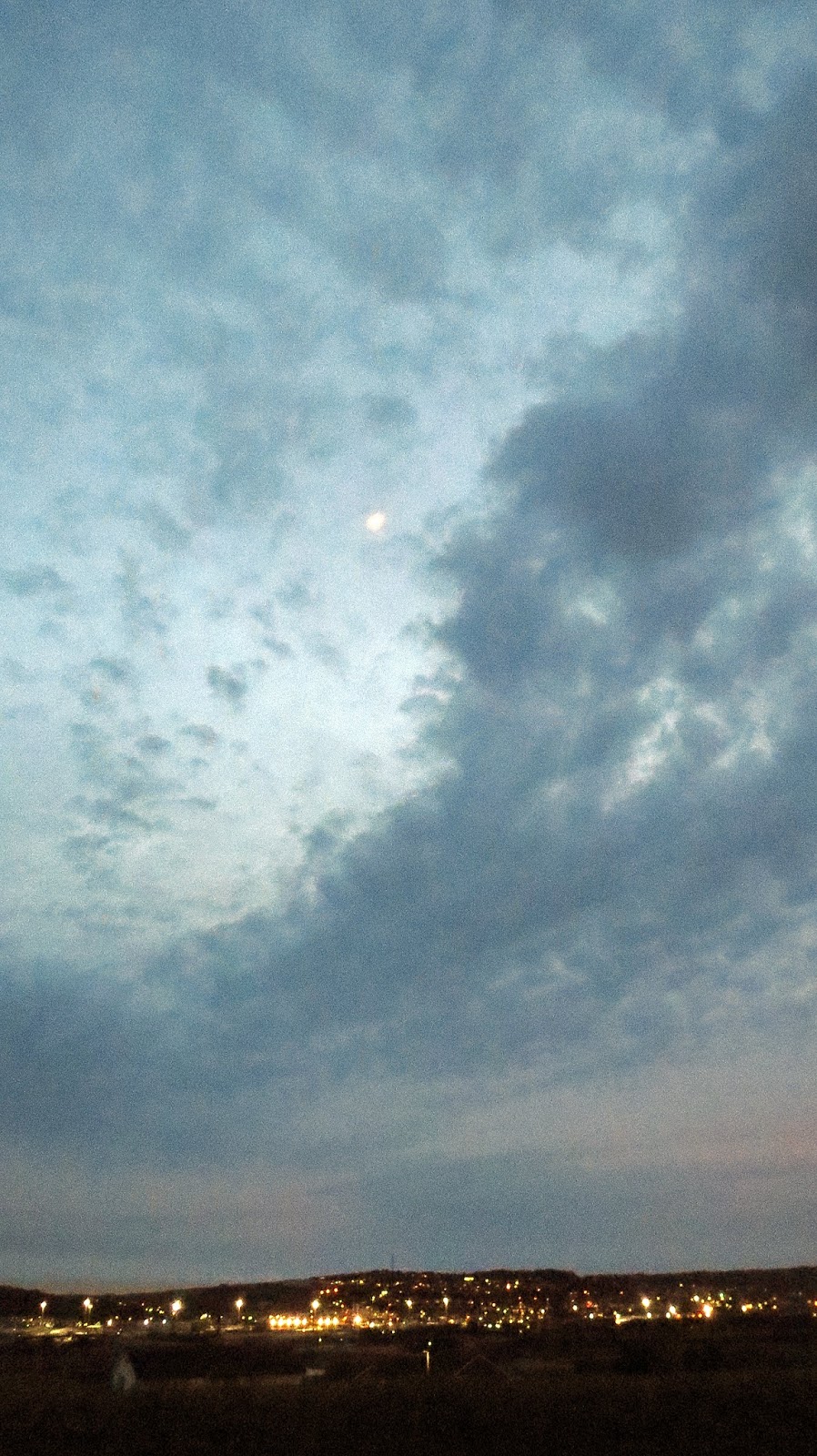
Moon near Venus
Mackerel sky
Thank goodness that the weather's been so nice during the Covid-19 lockdown. Things could have been much less relaxed. This is the first year I remember in which the first four weeks of the transect-walking season (otherwise known as the one hour daily exercise period) have been 100% sunshine. The perfect weather we've enjoyed since around mid-March is appreciated all the more because of the fresh memory of the miserable, wet winter we endured and because of the eventual break in the weather that we all know would eventually come; just as the beauty of the night sky is appreciated more by the memory of an overcast sky.

Knowing that the good weather was due to break on Monday night, I made a point of enjoying the last good evening for a while by taking a late walk when I was hopeful I would have the Bishopstone downs to myself. I did. The previous evening the sky was clear and the crescent moon, three days old, was near Venus. It was a stunning sight; one I could never tire of. Monday evening had a mackerel sky which faded to salmon pink as the sun sank; the Moon and Venus flashed in and out through the gaps. The air was still and the scent of flowers hung in the air, thick and sweet. I think people experience smells slightly differently from each other, in the same way we seem to see colours in slightly different hues. With cow parsley I sense a slight camphor odour, not as strongly as I do with Alexanders earlier in the season, but it is there faintly. As I walked along the silent paths in the gloaming, alternate smells of camphor and sickly sweet hawthorn overwhelmed the senses.

We walked up to the top of Mount Pleasant and via Norton Hill and Rookery Hill to the road at Bishopstone. I hoped to see the barn owl or a tawny owl, but the silhouettes were mostly crows and rooks. A cuckoo flashed out of the woodland edge at the top of Bishopstone Wood, my first of the season. I had heard it call a few minutes before and the dogs must have flashed it up. A little further on I saw what I thought might be a roe deer – not the first I have seen in the area – but it was too dim to make an ID with any degree of confidence. Whatever is was disappeared along a well-worn track and into the trees. I'll check it for droppings when I'm next over there in the daylight.

In the gloaming I'm struck by how things which are pale in colour tend to glow. Umbellifers and hawthorn blossom framed the fields and, amongst the grass, thousands of dandelion clocks lit up dimly like tiny lamps. I wouldn't have appreciated their number during the daylight and I love it that they became more obvious in the in-between light of the dusk. I learnt the other day that our word dandelion is taken from the French dents de lion, or lion's teeth, a description of the leaves. I wonder if the Normans brought the name over with them? 

Sunday afternoon allowed a long, leisurely ramble over the downs between South Heighton and Beddingham. The lockdown doesn't allow such long walks as I'd like, but I was able to make the most of the sun and light breeze. I climbed the hill above Page's Barn with the hope of finding some oak eggar caterpillars on the bramble between the path and fenceline, but none were seen. I counted 64 along the same stretch in 2014, but annual searches since have turned up nothing, which is disappointing. I did see my first painted lady of the season and possibly also my first small heath, but this disppeared before I could tell for certain. A little further along at Snap Hill I saw another red kite, bringing my 2020 tally to five – all in the Newhaven area.

The garden continues to delight. I noticed a number of yellow-backed clothes moth (Monopis obviella), carrion moth (Monopis weaverella), white-shouldered house-moth (Endrosis sarcitrella) and narrow-winged grey (Eudonia angustea) flying around the compost heap in the still air on Monday evening. I've found the Monopis species and sarcitrella to be associated with dried grass clippings in the past. More firsts have turned up in the moth trap: I have now recorded eleven species this month which I had never previously seen in April and newly-emergent species are appearing for the first time this year most nights now. The good weather has undoubtedly brought forward many emergence times, but the general trend of climate change must also be at play.

With a couple of days and nights still left in the month it is clear that this April has been one of the best for butterflies and moths. I've recorded 88 species and 1011 individuals so far. Only April 2014 has been better. Many species have been above both my five year and ten year average. I'll try and find time to write it up in more detail after the month end.

Painted Lady (Vanessa cardui) - my first for the season
Wall (Lasiommata megera) have been seen in good numbers this April
Path through Denton Wood
Wych Elms in flower and a gap in the canopy
Page's Barn and the path to Beddingham
Grey Pug (Eupithecia subfusca)
Turnip (Agrotis segetum) - fresh but missing an antenna
Yellow-backed Clothes-moth (Monopis obviella)

Thursday, 23 April 2020

Sociable Distance and other inspirations

Still the perfect weather helps to relieve the stresses of the lockdown confinement, slightly warmer and less breezy today with a lighter wind from the south instead of the easterly which has been dominating in recent weeks like a hair-dryer set to cool. Interestingly, the easterly breeze we often get, which can last for several days unabated, a bit like the Mistral, always seems to blow at a steady pace and without the blustery nature of the prevailing south-westerlies. This effect is especially felt along the ridge at the top of Mount Pleasant overlooking the waterworks at Poverty Bottom.

Red Admiral and Holly Blue sightings have been growing in number at home in the garden. Large Whites blouse their way across from garden to garden and Small Whites flutter through in decent numbers. Brimstones and Small Tortoiseshells seem scarce, although most of my Brimstones are usually seen abroad north of the downs along Wealden tracks that I'm not visiting so often this year.

The first, anticipated, sight of Cetonia aurata (Rose Chafer) has now been made in the garden, the metallic green elytra being quite conspicuous on the white Choisya blossoms. There were two today on it. It was a treat to see one a few years ago (perhaps less so for gardeners), but they seem to have established themselves so well in our area in recent years that they are a daily occurrence these days. The Choisya itself has spread a fair amount since last year when I thought it was a little stunted. The scent of the flowers is delicious and fills the garden, having taken over from the Daphne as if they had rehearsed it. Amanda wants to cut it back. Not on my watch.

Cetonia aurata - the long anticipated Rose Chafer
I made a couple of bee hotels from baked bean tins for the garden before breakfast. Funny how one expects an instant uptake by bees – I've been hovering expectantly at times throughout the day without noticing any interest. Jack-by-the-hedge was found growing by the pond; I think this is a first record for the garden. Ash leaves are now unfurling on the big tree, some way behind in progress from the expanding palms of sycamore. The ash has a lot of trunks, all with a filigree of climbing ivy. The tree must have been coppiced on several occasions before being left long enough to outgrow the gardener's saw. My moth trap lights it up at night like a feature tree.

Recent nights with the moth trap have seen the first appearance of Green Carpet and only my second ever April record of Coxcomb Prominent, which plays dead in the hand like a flake of wood. Brimstone Moth, Muslin, Angle Shades and Shuttle-shaped Dart are becoming slightly more numerous; Brindled Beauty and the Orthosias are dwindling slowly, but after an above-average season. Overall numbers are quite low, but should begin increasing again soon.


Coxcomb Prominent (Ptilodon capucina)
I did my transect walk at lunchtime today, with the dogs. I had high hopes, which came to little. Of the 52 butterflies seen, 39 were Small White which were loitering with intent around the oilseed rape, with a nice male Orange-tip, two Large Whites, seven Peacock, only a single Small Tortoiseshell,and two Nettle-tap moths making up the numbers on what was otherwise a quiet and disappointing day. The day had a siesta feel to it in the sun and slack winds; perhaps I should do the walk earlier or later?

The daily walk is a valuable distraction and I'd struggle through the lock-down without it, but each day I look across to Castle Hill LNR on the far side of the river valley and miss it more. I've been thinking of different ruses to help justify visiting and I think I've come up with a solution: a grass-roots walking movement designed to encourage people out for guided daily exercise (walks though – none of that pseudo-army boot camp business) at local nature reserves for one hour each day, walking two or more metres apart from the next person. Participants could bring two metre sticks with them, with or without sharpened points, to help keep other folk at bay. I have even come up with a snazzy name for it: Sociable Distance. The name might be better than the idea itself. Potential sticking points include:
  • engaging in an activity which might not fall within the spirit of the lock-down restrictions;
  • persuading Lewes District Council to consent to the use of the open space for an activity which might not fall within the spirit of the lock-down restrictions;
  • persuading my employer to agree to the time off work.
  • There are probably more sticking point to discover during this uniquely mendicant time.
Having the idea in the first place suggested to me that even I am beginning to crave social interaction with other humans. The spring moth lull must be getting to me.

Another lockdown-inspired idea occurred to me shortly afterwards, which would involve using pegs and string to mark out 2m squares at open spaces for people to enjoy wildlife whilst social distancing. The World Between us doesn't sound as snappy a title as Sociable Distance, so more work might be required and I am open to suggestions – and any suggestions received would demonstrate that I'm not the only person who reads this blog! A sticking point: would the Council agree to encourage people out to its nature reserves at the moment? I'm not sure I would.
Where the east wind blows - the ridge above Poverty Bottom


Tuesday, 21 April 2020

More lockdown delights

It's incredible how the natural world is just carrying on amidst all this Covid-19 lockdown business. A swarm of flies has been ignoring the two metre social distancing thingy, dancing around in the air above our rosemary in the back garden. There seemed to be more there today, so word is obviously getting around. I think they're lesser house flies, which must mean they are preparing an onslaught on the District's poultry houses.

Moths seem to be in their Spring lull since the Orthosias declined to a handful a night, but we did get a nice Powdered Quaker in the trap last night and I found a bonus Angle Shades on a nettle during my morning stroll around the garden, mug of tea in hand. I also found in the trap this morning a nice little chafer which I think was a summer chafer, but it seems far too early for this (it is named solstitiale after all) and was perhaps less hairy than the images in my book. It might be something else. It fell on the grass and melted away before I could photograph it, so I will have to hope for another before attempting an ID. Still no Rose Chafers seen in the garden, despite the Choisya being in near full bloom. I had hoped they might appear slightly earlier due to the good weather.

We took a lunchtime walk. The stockpiled brash on Norton Hill, where we heard a hedgehog at dusk a couple of days ago, today had a swarm of bees enjoying the shelter it afforded from the strong easterly breeze. They were too busy and quick to be identified, but I think they were a Lasioglossum species of some sort. To the south we looked longingly at Castle Hill LNR, which is mostly out of bounds during the present lockdown.

The butterfly season appears suddenly to have moved on and looks promising for the next six weeks or so, providing the weather stays good. We saw our first Small Copper yesterday; today there was a fair amount of activity in the sheltered places. We saw Large Whites (2), Small Whites (9), Red Admirals (4), Small Tortoiseshells (2), Commas (2), a Holly Blue, some Nettle-tap moths which were fizzing around the herbage, quite a few Dock Bugs (30), Gooden's Nomad Bee and our first dragonfly of the season: a female Large Red Damselfly, which I managed to take a shaky snap of. 

Swallows seem to be arriving in greater numbers. We've been seeing odd ones for about a month, but a small group of five were swooping around the hedge line on our way back home. Plenty of humans were out and about too – far more than usual since the lockdown was imposed but, unlike the flies, they were at least maintaining an appropriate distance.

Castle Hill LNR from Norton Hill

Female Large Red Damselfy (Pyrrhosoma nymphula) at Rookery Hill


Friday, 5 October 2018

Two years of walking the line

The Rookery Hill 'Mill' Barrow - repurposed ancient monument

The straight line from Falaise Road


I am nearing the end of my second year of weekly wildlife surveys along a line of farmed land between Denton and Bishopstone. The idea arose from a route I traced home two years ago this month from The Crouch in Seaford, which I was able to follow along a more or less straight line of footpaths. This path is stair-rod straight between The Crouch and the parish church of St. Andrew in Bishopstone – St. Andrew being the patron saint of fishermen. A little digging revealed that The Crouch in Seaford was once the site of a medieval market. The name ‘Crouch’ is derived from the Latin crux or cross: the market cross. The Crouch is located close to the coast where the course of the river passed by and other adjacent areas of low-lying land hint at the possibility of a harbour through which passed market goods: coastal and continental imports and locally-caught fish, which might have been brought along the similarly named Crooked Lane. The market ceased in 1712, when the former Cinque Port was in decline and the course of the Ouse had shifted further west.

Only at one point along the route through Seaford did I need to deviate from the line: a private house in Stafford Road ironically named The Gatehouse now blocks the way, whereas once, as the name suggests, it didn’t – except perhaps for those who didn’t know the magic word. The Gatehouse is at the top of a steep bank. The notion of history hiding in plain sight utterly compels me. The emergence of this trackway between the medieval market in the old parish of Sutton, close to Steyne Road – the stony place - to the parish church of St. Andrew in Bishopstone, which itself is linked by a nearly straight line to the parish church of St. Leonard in Denton, was a source of great excitement. So I celebrated its rediscovery in the way I know best by dedicating a wildlife survey to its memory!

The true reason for creating the weekly transect survey along this stretch of land was to study the impacts of intensive farming activity upon the insects, and to evaluate the importance of headland flora using butterflies (and moths) as an indicator. How better to do this though than to use ancient trackways that our ancestors used to travel to and from places of worship and commerce? I am using them instead to commune with nature.

I began the inaugural walk during the first week of April 2017 not yet having chosen the exact route; I decided that I would allow the land to decide where I should walk. The original idea that I would record butterflies on a weekly basis between April and October along a straight-lined route quickly evolved into something approaching a narrow ellipse.  At the end of that first walk I had traced a route from the end of Falaise Road in a roughly south-south-easterly direction beyond Foxhole and Stud Farms, as far as the gate at the bottom end of Rookery Hill by the Bishopstone village road, then back uphill beyond four tumuli as far as the kissing gate which separates Rookery Hill from Norton Hill. Incidentally, this kissing gate is situated on the banks of the northern-most tumulus, which was adapted during medieval times to act as the base of a mill. The route takes me along headlands abutting intensively-farmed fields and skirts the edge of improved pastures at Norton Hill and Rookery Hill. The headlands are razed to the ground each summer just prior to the harvest. Norton Hill is a recovering ‘improved grassland’ pasture, which is still moderate in terms of biodiversity, but with no recent fiddling and grazed by a small cattle herd, a flock of sheep and occasional escaped Dartmoor ponies. A mixed sward is slowly establishing itself year on year. Rookery Hill is an ancient landscape, formerly a promontory bounded by the Ouse floodplain on three sides, lately though an un-grazed meadow improved with fine grasses such as fescues and is cut for hay each June, approximately (but not intentionally) in phase with the interregnum between the first and second broods of the Small Heath butterfly. Neither meadow is rich in flora or fauna, but the tumuli act as an archipelago of tiny stable grassland habitats for mixed flora and insects. I have found previously unseen Silver-spotted Skipper and Adonis Blue butterflies in small numbers, as well as a good colony of Small Heath in these pastures. The latter species has been the undisputed monarch of Rookery Hill during the first two years of the survey.

The tumuli are bowl barrows, believed to be 3500 to 4500 years old. This is what Historic England has to say about them:

Bowl barrows, the most numerous form of round barrow, are funerary monuments dating from the Late Neolithic period to the Late Bronze Age, with most examples belonging to the period 2400-1500 BC. They were constructed as earthen or rubble mounds, sometimes ditched, which covered single or multiple burials. There are over 10,000 surviving bowl barrows recorded nationally, and …the bowl barrow on Rookery Hill survives well and … is one of the best examples of this type of monument to be found on the East Sussex Downs. These prehistoric barrows are the earliest known structures on Rookery Hill, and … provide evidence for the continuity of burial, settlement and agriculture in this area of Downland over a period of at least 3000 years.1
Today I followed the route with Leo and Charlie; they are helpful in flushing up butterflies and especially so the small heaths. It was a warming day, sunny with a light northerly breeze. The sky was grazed by a hundred contrails, suggesting the air was freezing cold at aircraft level. Even after several hours of sunlight, the longer grasses were still soaked with dew and some parts of the route were still in shadow. The diminishing power of the sun is evident in these places. All morning a nauseating hydrocarbon stench – surely the exhaust from Newhaven’s industrial centre? – had been carried downwind by the breeze and it wasn’t until nearly halfway that we’d moved beyond the plume. As I looked back I realised I was wrong: a dark plume of smoke was rising from Denton Wood, somewhere near the stable yard on The Crescent track. The smell was quite disgusting and probably not at all healthy.

Only the hottest patches along the route seemed to have attracted butterflies. The very start was the only part which had any activity during the first half, with the usual flurry of Large and Small Whites blousing their way around the hedges and scrub. These today were joined by a pair of Clouded Yellows and an inaugural record for the transect of Mallow Moth, which I followed for some minutes before it allowed me an approach close enough to gain a positive ID. Plenty of its food-plant lines the headland path. It was quiet otherwise; even the ivy bees nectaring on ivy blossom seemed fewer in number. The lack of Red Admirals was again noticed by their absence. Where I have counted 40 on a particular ivy patch in the past, today I saw none. This is proving to be a poor year for them, possibly because of the hot, dry weather in July.

The path along the field headlands was an insect desert. Birds in the paddocks at Foxhole Farm included a fair flock of Meadow Pipit with a few Pied Wagtails and Linnets intermingled. A Sparrowhawk circled overtly, high above. Occasional buzzards soared lazily on thermals higher still. The final section of the transect route is usually the most active, and so it was today. As Rookery Hill descended towards the floodplain below and tipped the angle of the ground sunwards, beneath the airflow, the additional heat hosted the only Small Heaths seen along the route – a pair close together. It was a day of pairs: two Red Admirals skimmed past with purpose and, by the largest of the four tumuli, a pair of third-brood male Wall Brown were alternately basking on hot dried grass patches and sparring in tight circles before suddenly and violently breaking apart. I lingered for a little while and noted that the pair would spar two or three times each minute. This must be an exhausting activity.

The temperature was rising on the way home to nearly 20°C and this encouraged a few more insects into action: a pair of Silver Y moths and a few more white butterflies. Adult numbers though are settling down for the winter now and there must now only be a few more weeks left in the survey season.

The list:
Large White (Pieris brassicaeI) 13
Small White (Pieris rapae) 3
Clouded Yellow (Colias croceus) 2
Small Heath (Coenonympha pamphilus) 2
Wall (Lasiommata megera) 4
Red Admiral (Vanessa atalanta) 2
Mallow Moth (Larentia clavaria) 1
Silver Y (Autographa gamma) 3

Reference
Bowl barrow, the north westernmost barrow of a group of six bowl barrows, forming part of a linear round barrow cemetery on Rookery Hill (online)  https://historicengland.org.uk/listing/the-list/list-entry/1009954 (accessed 05/10/18).


Rookery Hill barrow to Firle Beacon
Hotter microclimes
Mallow Moth (Larentia clavaria)
Ivy blossom
St. Andrews at Bishopstone - a straight line to The Crouch marketplace

Saturday, 23 June 2018

White-legged Damselfly


The pond at Piltdown


We ventured north of the district yesterday in search of the White-legged Damselfly (Platycnemis pennipes). These elegant, feather-legged little damsels like to bask on abundant floating vegetation and the pond at Piltdown, which has caught my attention while driving past, looked a promising site.
My reason for hunting ‘featherlegs’ is to contribute to a survey that’s been organised by the British Dragonfly Society: the White-legged Damselfly Investigation. The point is to learn more about this species and add to our limited understanding of it. There are increasing concerns that this dainty little insect is in decline in Britain. More information about the survey can be found here.

The very first damsel I focused my binoculars on was a White-legged Damelfly, a male on an iris leaf manoeuvring its abdomen in the fashion of an ovipositing female. On closer inspection it was stuck to some spider silk. Once freed it stood on my finger for a few moments before gently alighting half a metre to another iris, where we both lingered for a little while.

The pond didn’t disappoint; it was alive with seven damselfly species, basking on what seemed every blade and leaf of vegetation. Black-tailed Skimmers patrolled the banksides while teeming Swifts screeched above them. Two hours later I had seen eight damselfly and dragonfly species, along with a few other species of interest.

Rutpela maculata long-horn beetle

Species seen:

Odonata (eight species) 
 Banded Demoiselle (Calopteryx splendens)  2
White-legged Damselfly (Platycnemis pennipes)  2
Large Red Damselfly (Pyrrhosoma nymphula)  2
Blue-tailed Damselfly (Ischnura elegans)  29
Common Blue Damselfly (Enallagma cyathigerum)  5
Azure Damselfly (Coenagrion puella)  120
Red-eyed Damselfly (Erythromma najas)  5
Black-tailed Skimmer (Orthetrum cancellatum)  12

Lepidoptera (eight species)
Nut Leaf Blister Moth (Phyllonorycter coryli)  - mines on hazel leaves
Large Skipper (Ochlodes sylvanus)  3
Large White (Pieris brassicae)  1
Small White (Pieris rapae)  4
Green-veined White (Pieris napi)  2
Ringlet (Aphantopus hyperantus)  1
Meadow Brown (Maniola jurtina)  1
Comma (Polygonia c-album)  1

Coleoptera (one species)
Yellow and black Longhorn Beetle (Rutpela maculata) 2

White-legged Damselfly (Platycnemis pennipes)

Blue-tailed Damselfly (Ischnura elegans)